Aerodynamics is a branch of physics that studies the motion of air and the effects of air flow on objects. It is an important part of many fields such as aircraft design, automotive engineering, and meteorology. This blog will explore the fundamentals of aerodynamics, including its history, principles, and applications. Additionally, it will discuss the implications of aero-dynamic principles for modern engineering and technology. Specifically, I will argue that aerodynamics is essential in the design of aircraft and automobiles, enabling them to fly or move more efficiently and safely. To support this claim, I will provide examples from the history of aerodynamic engineering and discuss the key principles of aerodynamics. Finally, I will consider the future of aerodynamics and its potential applications. In the following paragraphs, I will discuss the history of aerodynamics, its principles, and its applications.
If you have ever watched a rocket launch, you might have noticed how it seems to glide effortlessly through the air, defying gravity and reaching the sky. But, have you ever wondered how this is possible? One of the key factors that enable a rocket to launch successfully and reach its desired orbit is aerodynamics. In this article, we will explore the role of aerodynamics during rocket launch.
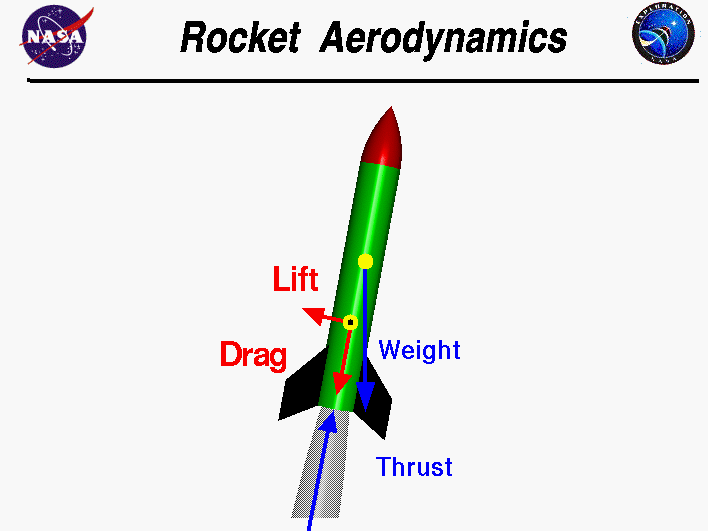
Aerodynamics is the study of how objects move through the air. When it comes to rocket launches, aerodynamics play a crucial role in determining the rocket's trajectory, stability, and efficiency. A rocket's aerodynamic performance is determined by various factors such as its shape, size, and speed, as well as the properties of the atmosphere it is launching in.
Let's first take a look at the rocket's shape. The rocket's shape is designed to minimize air resistance or drag. Air resistance occurs when air molecules collide with the surface of the rocket, creating a force that slows down the rocket's movement. The rocket's shape is designed to minimize the amount of surface area that comes into contact with the air, thereby reducing drag. To achieve this, the rocket's body is streamlined, with a pointed nose cone that helps reduce the amount of air resistance the rocket faces as it moves through the air.
Next, let's consider the rocket's size. The rocket's size also plays a crucial role in its aerodynamic performance. A larger rocket tends to experience more air resistance than a smaller one. Therefore, rocket designers try to make the rocket as small as possible while still meeting all the requirements for the mission. This not only reduces air resistance but also allows the rocket to carry more payload, as less fuel is needed to launch a smaller rocket.
Another important factor is the rocket's speed. The faster the rocket moves through the air, the more air resistance it faces. Therefore, rocket designers try to minimize the time the rocket spends in the lower atmosphere, where air resistance is the highest. They do this by launching the rocket vertically, so that it can quickly move out of the denser lower atmosphere and into the thinner upper atmosphere. Additionally, the rocket's engines are designed to provide maximum thrust during the initial stages of the launch to accelerate the rocket as quickly as possible.
Finally, let's consider the properties of the atmosphere. The atmosphere can have a significant impact on the rocket's aerodynamic performance. For example, air density decreases with altitude, meaning there is less air resistance at higher altitudes. This is why rockets are launched from areas with low air density, such as near the equator or in remote areas with minimal air traffic. Additionally, the atmosphere can affect the rocket's stability, as variations in air pressure can cause the rocket to wobble or spin. To prevent this, the rocket's fins and other control surfaces are designed to stabilize the rocket and keep it on course.
In conclusion, aerodynamics play a critical role in rocket launches. Rocket designers must consider a range of factors such as the rocket's shape, size, speed, and the properties of the atmosphere it is launching in to ensure a successful launch. By carefully designing the rocket's aerodynamic performance, engineers can help ensure that the rocket reaches its intended destination, whether that be a satellite in orbit or a manned mission to the moon or beyond.