How the Apollo Mission Revolutionized Space Exploration

The Apollo mission of the 1960s was a crucial step in human space exploration. Not only did it enable the first successful visit to the moon by humans, but it also helped to lay the groundwork for future space exploration. Let’s take a look at how this mission changed the course of history and what it means for us today.
The Apollo mission was part of the larger Apollo program, which was the third human spaceflight program undertaken by NASA. The mission had five primary objectives: reconnaissance of the moon’s surface, collection of scientific data, photography of the lunar surface, measurements of the Earth-Moon system, and the return of samples from the moon. The mission was launched in July 1969, with Neil Armstrong and Edwin “Buzz” Aldrin becoming the first two humans to set foot on the moon.
The mission was a major success, and the technology developed during the mission was used for other space exploration projects, such as the Viking probes and the Hubble Space Telescope. The Apollo mission also paved the way for the construction of the International Space Station and the deployment of other satellites.
The Apollo mission also encouraged a renewed interest in space exploration and helped to inspire a generation of scientists and engineers. It sparked an enthusiasm for science and technology that has continued to this day.
The mission also had a significant impact on public opinion about space exploration. Before the mission, there was a significant amount of skepticism about the feasibility of human exploration of space. The success of the mission changed public opinion and led to increased funding for space exploration.
The technology and data collected from the Apollo mission were used to create a detailed map of the moon’s surface and helped to establish the first accurate measurements of the moon’s gravity field. The mission also provided valuable insights into the composition of the moon, which helped inform our understanding of the formation of the solar system.
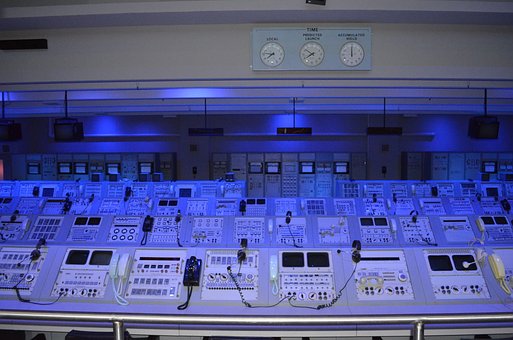
The Apollo mission helped to usher in a new era of space exploration and provided a crucial stepping stone to our current understanding of the universe.
The Apollo missions are some of the most significant achievements in human history. They represent a remarkable feat of technology, engineering, and human willpower that brought mankind to the surface of the Moon and forever changed our understanding of the universe.
In the 1960s, the United States was in the midst of a Cold War with the Soviet Union, and tensions were high. President John F. Kennedy announced in 1961 that the United States would commit to landing a man on the Moon and returning him safely to Earth before the end of the decade. This ambitious goal would require the development of new technologies and the mobilization of a massive effort involving thousands of scientists, engineers, and support personnel.
The Apollo program involved a series of manned missions, each building on the successes and lessons learned from previous missions. The first manned Apollo mission, Apollo 7, was launched in October 1968 and orbited the Earth for 11 days, testing spacecraft systems and crew performance.
The Apollo 8 mission, launched in December 1968, was the first to leave Earth's orbit and orbit the Moon. The crew of Apollo 8, Frank Borman, Jim Lovell, and Bill Anders, became the first humans to see the far side of the Moon and took the iconic "Earthrise" photograph, showing our planet rising above the lunar horizon.
In July 1969, Apollo 11 was launched with Neil Armstrong, Buzz Aldrin, and Michael Collins on board. Armstrong and Aldrin became the first humans to walk on the Moon's surface, while Collins remained in orbit around the Moon. The landing of Apollo 11 on the Moon marked a major milestone in human history, demonstrating the incredible capacity of our technology and the courage and determination of the astronauts and support staff who made it possible.
Subsequent Apollo missions continued to build on the successes of earlier missions, conducting scientific experiments, testing new technologies, and exploring different regions of the Moon. The final Apollo mission, Apollo 17, was launched in December 1972 and marked the end of the Apollo program.
The Apollo missions were a remarkable achievement that had a profound impact on our understanding of the universe and our place in it. The scientific experiments conducted on the Moon provided important data on the Moon's geology, as well as the formation and evolution of the solar system. The development of new technologies, such as the Lunar Module and the Saturn V rocket, paved the way for future space exploration and have continued to shape our understanding of the universe.
The Apollo missions also had a significant cultural impact, inspiring people around the world and fostering a sense of national pride and unity. The astronauts who participated in the Apollo program became symbols of the incredible human potential for exploration and discovery.
In conclusion, the Apollo missions represent one of the most remarkable achievements in human history, demonstrating the incredible capacity of our technology and the courage and determination of the astronauts and support staff who made it possible. They have forever changed our understanding of the universe and continue to inspire people around the world to push the boundaries of what is possible.
If interested more in space exploration, you can also read another very amazing blog on this topic by clicking the link below:
https://spacetalksspark47.blogspot.com/2023/03/history-of-space-exploration.html
