
Exploring space has been a dream of humankind for centuries. We have always looked up at the stars and wondered what is out there, and with modern technology, we have been able to start to answer that question. However, space travel is not as simple as just hopping in a spaceship and taking off. The physics of space travel is complex and requires a deep understanding of the laws of physics. In this blog post, we will explore the physics of space travel and how we are able to get to other planets.
The Basics of Space Travel
Before we dive into the specifics of how we get to other planets, let's first take a look at the basics of space travel. Space travel is all about escaping Earth's gravity and reaching a high enough velocity to maintain orbit or travel to other celestial bodies. In order to do this, we need to overcome a number of physical challenges.
Gravity
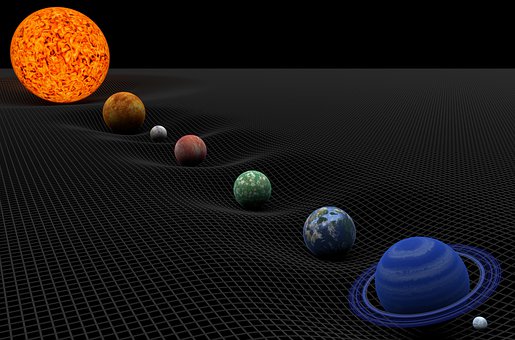
The first and most obvious challenge of space travel is Earth's gravity. The force of gravity is what keeps us firmly planted on the ground and prevents us from floating away into space. To escape Earth's gravity, we need to achieve what is known as escape velocity. This is the speed at which an object must travel to overcome the gravitational pull of a planet or other celestial body.
Escape velocity for Earth is around 11.2 kilometers per second (25,000 miles per hour). This means that any object that wants to leave Earth's gravity well must achieve a speed of at least 11.2 kilometers per second. Achieving this speed requires a tremendous amount of energy, which is why rockets use powerful engines to propel themselves into space.

Thrust
To overcome gravity and achieve escape velocity, rockets need to generate a large amount of thrust. Thrust is the force that propels a rocket forward, and it is generated by burning fuel and expelling it out of the rocket's engines. The more thrust a rocket generates, the faster it can accelerate, and the more energy it can impart to its payload.
However, generating thrust is not as simple as just burning fuel. The laws of physics dictate that every action has an equal and opposite reaction. This means that when a rocket expels fuel out of its engines, the fuel exerts an equal and opposite force on the rocket, propelling it forward. This is known as Newton's Third Law of Motion.
In order to generate the necessary amount of thrust, rockets need to burn a large amount of fuel. The more fuel a rocket carries, the more thrust it can generate, but also the heavier it becomes, which requires even more fuel to lift off the ground. This is why rockets are so large and require a tremendous amount of fuel to get off the ground.
Orbit
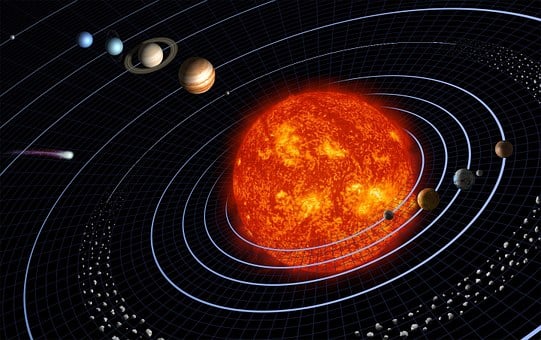
Once a rocket has achieved escape velocity, it must maintain a high enough velocity to stay in orbit around a planet or other celestial body. This requires a delicate balance between the force of gravity, which is trying to pull the rocket back down to the planet, and the rocket's velocity, which is trying to carry it away.
To maintain orbit, a rocket must achieve what is known as orbital velocity. This is the speed at which an object must travel to maintain a stable orbit around a planet. The exact speed of orbital velocity depends on the mass and size of the planet, but it is typically around 7.9 kilometers per second (28,000 kilometers per hour) for low Earth orbit.
Reaching Other Planets
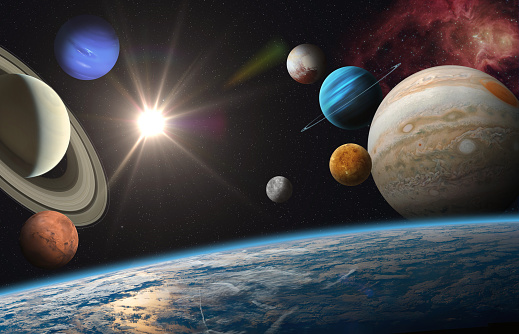
Now that we have a basic understanding of the physics of space travel, let's take a look at how we are able to reach other planets. Reaching other planets requires a number of additional challenges beyond simply escaping Earth's gravity and achieving orbit.
Exploring space has been a dream of humankind for centuries. We have always looked up at the stars and wondered what is out there, and with modern technology, we have been able to start to answer that question. However, space travel is not as simple as just hopping in a spaceship and taking off. The physics of space travel is complex and requires a deep understanding of the laws of physics. In this blog post, we will explore the physics of space travel and how we are able to get to other planets.
Interplanetary Travel
The first challenge of interplanetary travel is the vast distances involved. Even the closest planets to Earth, such as Mars, are millions of kilometers away. This means that we need to design spacecraft that are capable of traveling vast distances while carrying enough supplies for the journey.
One of the key concepts in interplanetary travel is the Hohmann transfer orbit. This is a type of orbit that allows a spacecraft to travel from one planet to another with the least amount of fuel. The Hohmann transfer orbit takes advantage of the fact that planets move in elliptical orbits around the Sun, and that there are specific points in those orbits where the distance between the planets is at its minimum.
To use the Hohmann transfer orbit, a spacecraft must first achieve a stable orbit around Earth. It then waits until the position of the target planet is at its closest point to Earth. At this point, the spacecraft fires its engines to change its orbit and enter the Hohmann transfer orbit. This orbit takes the spacecraft out of Earth's orbit and on a trajectory that will intersect with the target planet's orbit. Once the spacecraft reaches the target planet, it must use its engines to slow down and enter orbit around the planet.

Radiation
Another challenge of interplanetary travel is the radiation that exists in space. Cosmic radiation is a type of high-energy radiation that exists in space and can be harmful to human health. This radiation is particularly dangerous during long-duration space missions, such as interplanetary travel.
To protect astronauts from radiation, spacecraft are typically equipped with shielding that blocks or absorbs radiation. The most effective types of shielding are materials that are dense and heavy, such as lead or tungsten. However, these materials are also heavy and add weight to the spacecraft, which can make it more difficult to achieve escape velocity and maintain orbit.
Conclusion
In conclusion, the physics of space travel is complex and requires a deep understanding of the laws of physics. Overcoming Earth's gravity, achieving escape velocity, and maintaining orbit are just the first steps in space travel. Reaching other planets requires additional challenges, such as interplanetary travel and protecting astronauts from radiation.
Despite these challenges, space travel is an important field of study that has the potential to unlock many mysteries of the universe. With continued research and development, we may one day be able to travel to other planets and explore the far reaches of our solar system and beyond.