
Humanity has always been fascinated with space exploration, and for good reason. It offers a glimpse into the unknown, the infinite possibilities that lay beyond our planet. In order to explore these possibilities, we need technology that can withstand the harsh conditions of space and provide energy to power our spacecrafts during long journeys.
One of the most promising and widely used technologies for space exploration is solar technology. This technology harnesses the power of the sun to provide clean, renewable energy. This is crucial for space exploration as spacecrafts need energy to power their systems and keep their crew alive during long missions.
But solar technology in space is not as simple as installing solar panels on a roof. The conditions in space are vastly different from those on Earth. For one, the radiation in space is much more intense, and so special materials need to be used to protect solar panels from damage. Additionally, the extreme temperatures and vacuum of space can cause issues for the solar panels.
Despite these challenges, solar technology has been widely used in space exploration. In fact, NASA has been using solar panels to power their spacecrafts since the 1960s. The Vanguard 1 satellite, launched by NASA in 1959, was the first artificial satellite to use solar panels to generate electricity.
But it wasn't until the 1970s that solar technology truly came into its own in space exploration. NASA's Apollo 17 mission, the last manned mission to the moon, used a Lunar Roving Vehicle (LRV) that was powered entirely by solar panels. The LRV was able to travel up to 5 miles away from the Apollo 17 landing site, allowing astronauts to explore more of the moon's surface than ever before.
Since then, solar technology has continued to be a crucial part of space exploration. The International Space Station (ISS), which is orbiting the Earth, is powered entirely by solar panels. The solar panels aboard the ISS are located on four large arrays that rotate with the station to follow the sun and maximize their energy production.
Solar technology has also been used in many unmanned space missions. The Mars Exploration Rovers, Spirit and Opportunity, both used solar panels to generate electricity during their missions on the Red Planet. The Juno spacecraft, which is currently orbiting Jupiter, uses solar panels to generate electricity and power its instruments.
One of the advantages of solar technology is that it is highly reliable. This is crucial for space exploration, where there is no room for error. Solar panels can provide a constant source of energy, allowing spacecrafts to function effectively for long periods of time. This also means that they require little maintenance, which is important when considering the costs of space missions.
Another advantage of solar technology is that it is clean and renewable. In space, there are no fossil fuel reserves to tap into, so solar panels provide a reliable source of energy that doesn't produce any harmful emissions. This is important when considering the impact that space exploration can have on the environment.
However, there are still some disadvantages to solar technology in space. For one, the amount of energy that solar panels can produce is limited by the size of the panels. This means that large spacecrafts may need to use multiple arrays of solar panels to generate enough energy to power their systems. Additionally, solar panels can be expensive to manufacture, which can add to the overall cost of space missions.
Despite these challenges, solar technology remains a crucial component of space exploration. It offers a reliable, clean, and renewable source of energy that can power the spacecrafts that allow us to explore the vast expanse of space. As we continue to push the boundaries of what is possible in the field of space exploration, it is likely that solar technology will remain a key tool in our arsenal.
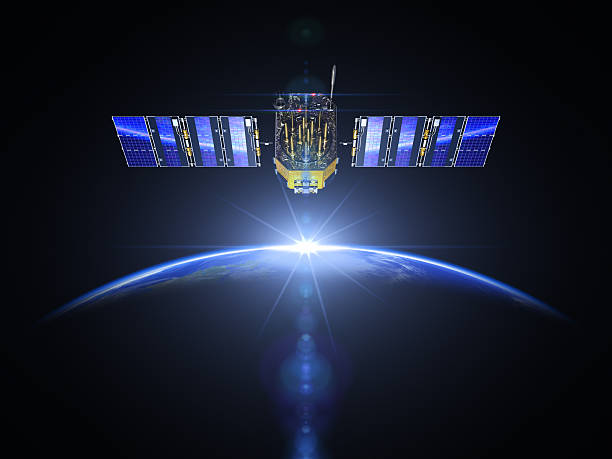
The electric energy produced by solar panels is also used to used to generate thrust for spacecrafts, let's learn more abut this this amazing technology which goes by the name Solar Electric Propulsion.

Solar Electric Propulsion, also known as an ion engine, is a fascinating technology that offers a new approach to space propulsion. Unlike traditional chemical propulsion systems, SEP uses electric fields to accelerate charged particles, typically ions, to produce thrust. This continuous, low-thrust acceleration provides significant fuel savings and improved spacecraft efficiency.
SEP works based on the principle of electrostatic acceleration. In a typical ion engine, xenon gas is ionized and then accelerated by a high voltage electrical field. The accelerated ions are then expelled from the engine at high speed, producing thrust. This process is repeated continuously to produce a steady flow of thrust. SEP typically uses a solar array to generate the electrical power required for ionization and acceleration.
The advantages of SEP are numerous. It provides a more efficient means of propulsion than chemical rockets, using significantly less fuel to achieve the same velocity. Additionally, it enables longer mission durations, making it ideal for deep space missions. SEP provides a low-thrust, continuous acceleration, making it ideal for spacecraft that require precise trajectory adjustments, such as interplanetary missions. Finally, the reduced fuel requirements of SEP result in lower launch costs, as less fuel needs to be transported into orbit.
However, there are also some disadvantages to consider. SEP provides a relatively low-thrust acceleration, which limits its use for rapid maneuvering or launch applications. The design of an SEP system is more complex than traditional chemical propulsion systems, requiring additional components such as an ionization chamber, accelerator, and ion thruster. Additionally, xenon, the most commonly used propellant for SEP, is relatively rare and expensive, which could limit the widespread use of this technology.
SEP is ideal for a range of space missions, including deep space exploration and interplanetary missions. Some specific applications include asteroid exploration, Mars missions, and outer planet exploration. As research into SEP continues, we can expect to see more widespread use of this technology in future space missions.
In conclusion, SEP offers a promising new technology for space exploration that provides a more efficient means of propulsion. While there are some disadvantages to consider, the benefits of SEP make it ideal for deep space missions, interplanetary exploration, and other applications where precision and efficiency are required.
