
Introduction
Blue Origin, a private aerospace company founded by tech visionary Jeff Bezos in 2000, has been making strides in revolutionizing space exploration. One of their most significant accomplishments is the Shepard 22 rocket. In this blog post, we'll explore Blue Origin's goals and achievements, and take a closer look at the features of the Shepard 22 rocket.

Blue Origin's Vision
Blue Origin aims to create a future where space exploration is commonplace and accessible, with the potential to transform industries ranging from tourism to manufacturing. Their goals include lowering the cost of space access, increasing human activity beyond Earth, and developing reusable space systems. They believe that space holds the key to a sustainable future for our planet.
Significant Milestones
Since its inception, Blue Origin has achieved several noteworthy milestones. Their New Shepard rocket, named after American astronaut Alan Shepard, was the company's first fully reusable suborbital rocket system. It successfully launched and landed multiple times, demonstrating the feasibility of reusable rockets and marking a significant step forward in reducing the cost of space access.
Blue Origin is also developing the New Glenn, a heavy-lift orbital launch vehicle that can deliver both crewed and uncrewed payloads to space. This rocket will expand Blue Origin's capabilities and enable them to compete in the global commercial space market. They've also set their sights on the moon, with the goal of developing lunar landers for future manned missions. Their Blue Moon lander is designed to transport payloads, equipment, and eventually humans to the lunar surface.
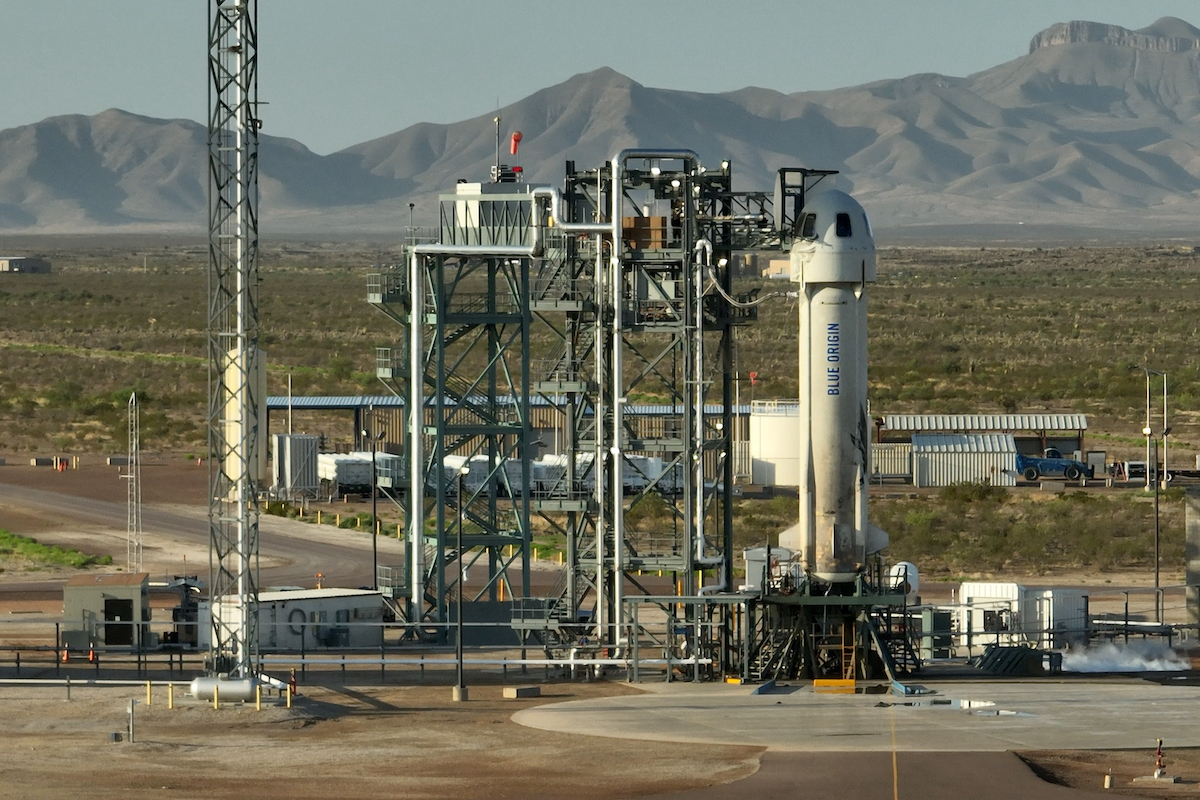
Introducing the Shepard 22
The Shepard 22 is Blue Origin's latest innovation, designed to further expand the boundaries of space exploration. Let's take a closer look at its features and capabilities.
Purpose and Design
The Shepard 22 is an advanced, fully reusable rocket designed to deliver payloads and passengers to suborbital space. Its state-of-the-art technology and commitment to reusability make it a crucial step toward achieving cost-effective and routine space access.

Launch and Landing System
The Shepard 22 features a vertical takeoff and landing (VTOL) system. Its BE-3 engine uses a combination of liquid hydrogen and liquid oxygen propellants, making it highly efficient and environmentally friendly. After reaching its desired altitude, the rocket's propulsion module separates and descends back to Earth autonomously, while the crew capsule continues its journey.

Crew Capsule and Passenger Experience
The Shepard 22's crew capsule is designed to provide a safe and comfortable experience for passengers. Its large windows offer stunning views of Earth from space. Passengers aboard the Shepard 22 will experience several minutes of weightlessness, giving them the opportunity to float freely and witness the beauty of our planet from a unique perspective.
Payload Capacity
The Shepard 22 has a significant payload capacity, making it suitable for various scientific and commercial applications. It can accommodate experiments, microgravity research, and small satellites, allowing researchers and entrepreneurs to conduct research and development in space.
Conclusion
Blue Origin's vision of making space accessible and commonplace is becoming a reality with their achievements in space exploration. The Shepard 22 is a revolutionary rocket designed to further expand the boundaries of space exploration, bringing us one step closer to a sustainable future in space. With Blue Origin's commitment to innovation and reusability, we can expect to see more groundbreaking developments from this visionary company in the years to come.