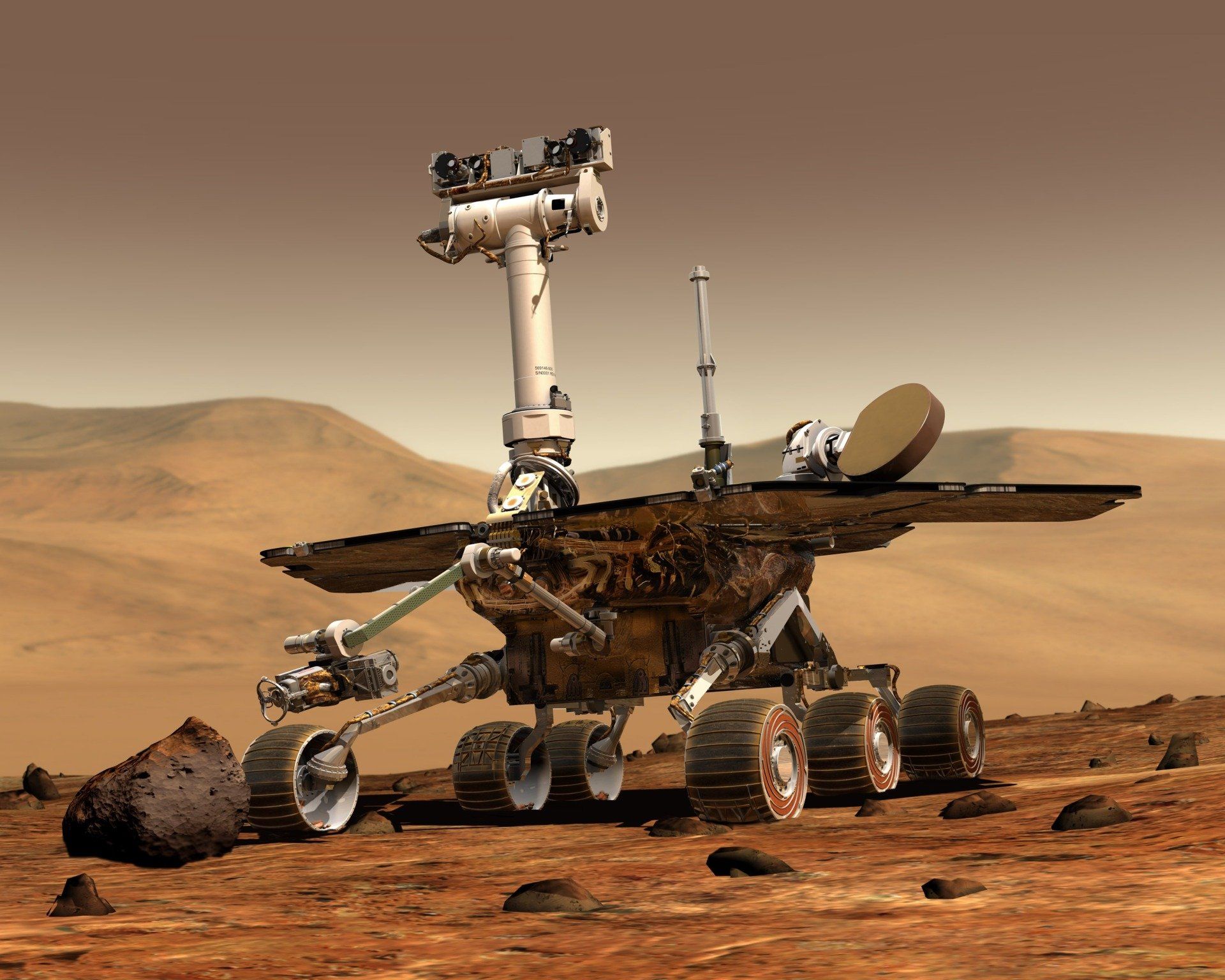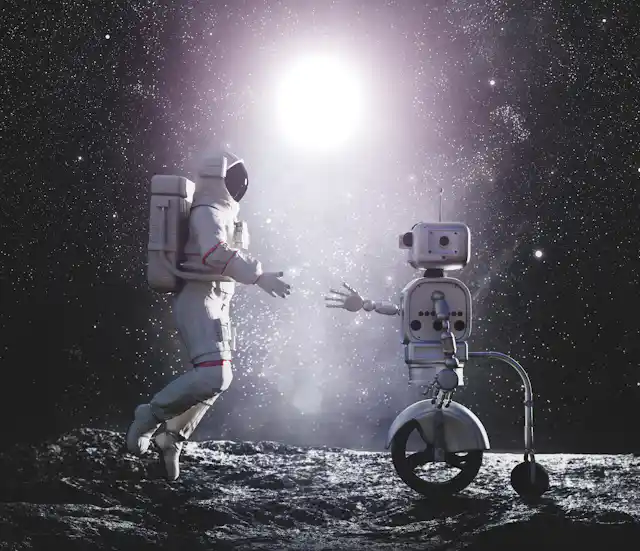
Yes, AI can be used for many space exploration related tasks. For example, AI can be used to identify objects in space and distinguish between different types of asteroids. AI can also be used to analyze data from space telescopes and other sources to identify potential new planets. Additionally, AI can be used to autonomously control spacecraft to explore and collect data from far-off places in space. AI can also be used to interpret data collected from space probes, satellites and other instruments, which can help scientists make better decisions about the future of space exploration.
AI has been increasingly used in space exploration. This technology has enabled us to explore the universe in ways that would have been impossible before. Here are some of the advantages and disadvantages of using AI for space exploration:

Advantages
AI can help make space exploration more efficient and cost-effective. AI can help with tasks like analyzing data from satellites, which can help scientists and engineers gain more insight into the universe.
AI can process data faster than humans and can make decisions more quickly. This can be used to quickly assess the safety of a mission and make decisions about the best path forward.
AI can help reduce the risk of human error. Human errors can lead to costly and dangerous mistakes. By using AI on space missions, these mistakes can be avoided.
Disadvantages
AI is expensive and complex to build and maintain. This makes it difficult to implement in space exploration.
AI can sometimes make decisions that are not based on the best information. This can lead to mistakes and incorrect decisions.
AI can be limited in its ability to think abstractly and critically. This means that its decisions may be limited or incorrect.
AI can be prone to bias if it is not properly designed and monitored. This can lead to incorrect assumptions and conclusions.